Assistive communication
The right words,
at the right moment.
Revoce keeps a nonverbal person’s communication board in step with the conversation happening around them, so nobody has to program it in advance.
| Suggestion layer | 10 phrases: 5 core, 5 suggested |
|---|---|
| Core words | 5, fixed, never model-selected |
| Full board | Complete AAC vocabulary, one tap away |
| Ranking latency | Tens of ms, ordinary CPU |
| Processing | Fully local. No network required |
| Wearable | ESP32-S3 · ~$15 in parts |
| Status | Working prototype, in pilot testing |
Recognised by







The problem
The words are always in the wrong place.
- 4–5M
- people in the U.S. can’t meet daily communication needs with speechCommunicationFIRST
- 10–18
- words per minute for AAC users, against 125–185 for speechASHA
- 1 in 3
- dedicated devices abandoned within the first yearAAC device abandonment, 2023
AAC boards work. The problem is that someone decides what’s on them ahead of time, and then the day happens. The person hunts through menus for words that were never there while the conversation moves on. Most of the speed gap isn’t the tapping. It’s the searching.
A good communication partner doesn’t guess the one thing you’re about to say. They keep several within reach.


In the room
Same board. Three different rooms.
Classroom · someone says
“What do plants take in from the air?”
Nobody programmed this board. Illustrative only; real captures replace it before launch.
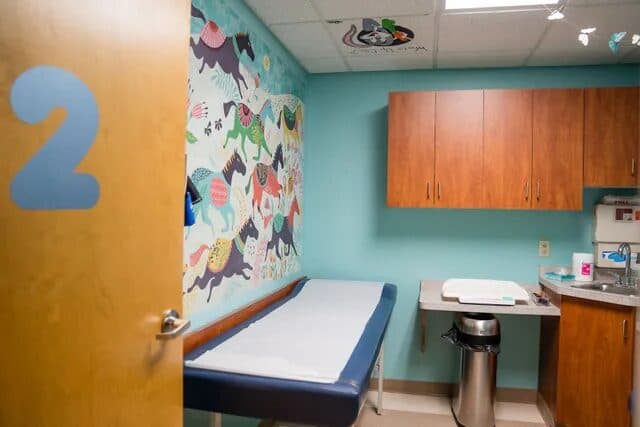
Doctor’s office · someone says
“Where does it hurt?”
Dinner table · someone says
“Do you want more pasta?”
The core row
Five words the model cannot touch.
yes · no · help · stop · I need never move, so reaching for them becomes muscle memory. However badly a suggestion goes, there is always a way to say no and a way to stop.
The suggestions sit on top of the board, not instead of it. The full AAC vocabulary stays one tap away.
- Tapping a phrase speaks it aloud, in a voice the user picks.
- A lock button freezes the board mid-thought, so the screen never reshuffles under a finger.
- A quiet indicator shows when new suggestions are waiting, rather than swapping them in unannounced.
The talk
Revoce, explained in full.
Three minutes: the problem, the system running end to end, and a board rebuilding itself in a real conversation.
System
Three pieces, one boundary.
The wearable
Senses only.
ESP32-S3 · ~$15 in parts
The hub
All the intelligence, here.
rank_vocabulary(scene, transcript, context)
→ ranked_words
A laptop or a mini-PC
The board
Displays and speaks.
Any tablet you already own
Swap the models, touch nothing else.
The wearable never calls a model. The web page never calls a model. Everything underneath can be replaced without changing either.
Word choice is not a language-model call.
A compact ranking network we trained over sentence embeddings, plus a selection algorithm that spreads phrases apart and reserves a slot for a real answer.
Tens of milliseconds, ordinary CPU.
No graphics card. Fast enough to land inside a conversation’s natural pause.
Privacy
The recordings don’t exist.
A device that watches and listens all day, worn by someone who may not be able to object to how it’s used, is a serious thing to build. We designed around that rather than adding a policy on top.
Everything runs locally.
No audio, video or transcript reaches any external service.
Nothing is stored.
Audio and video pass through memory and are discarded. There is no recording to leak.
The off switch is a switch.
A button on the wearable stops capture. Not a setting in an app.
Context stays put.
Names, routines and preferences never leave the machine they’re on.
The model never speaks.
The utterance is always the user’s tap.
Pilot sessions run under written consent, including proxy consent where appropriate, with pseudonymized handling agreed beforehand.
Where we are
Working prototype. Looking for the people who know what we don’t.
Revoce runs end to end today, evaluated across 120 constructed scenarios, and the first pilot sessions have started. What it needs now is more of them, and harder ones.
Clinicians and SLPs
to tell us where the vocabulary is wrong, condescending, or missing.
Autism centers and schools
interested in a small, consented pilot.
Researchers
in AAC, HCI, assistive tech or on-device ML. Collaboration, co-authorship, or a hard critique.
Students
wanting scoped work in embedded systems, on-device ML, evaluation, or interface design.